UN Economic and Social Commission for Asia and the Pacific
United Nations Environment Programme

UN Economic and Social Commission for West Asia
UN Economic Commission for Africa

UN Economic Commission for Europe

UN Economic Commission for Latin America and the Caribbean
In 2021, the UN Environment Management Group (EMG), in collaboration with UNEP, UNEP Finance Initiative and the UN Regional Commissions, convened a three-part Nexus Dialogue series exploring how the global response to COVID-19 could advance a greener, more resilient and sustainable recovery.
The series brought together perspectives on defining and measuring green recovery, mobilizing public and private finance for sustainable economic transformation, and applying integrated, regionally tailored approaches to building back better. Through discussions on policy, financing and practical regional experiences, the dialogues highlighted opportunities to embed environmental sustainability and climate action into recovery strategies.
The series comprised three virtual dialogues:
- Defining Green Recovery (27 April 2021): Exploring how to define, monitor and evaluate green recovery, including the environmental impacts of economic recovery and stimulus measures.
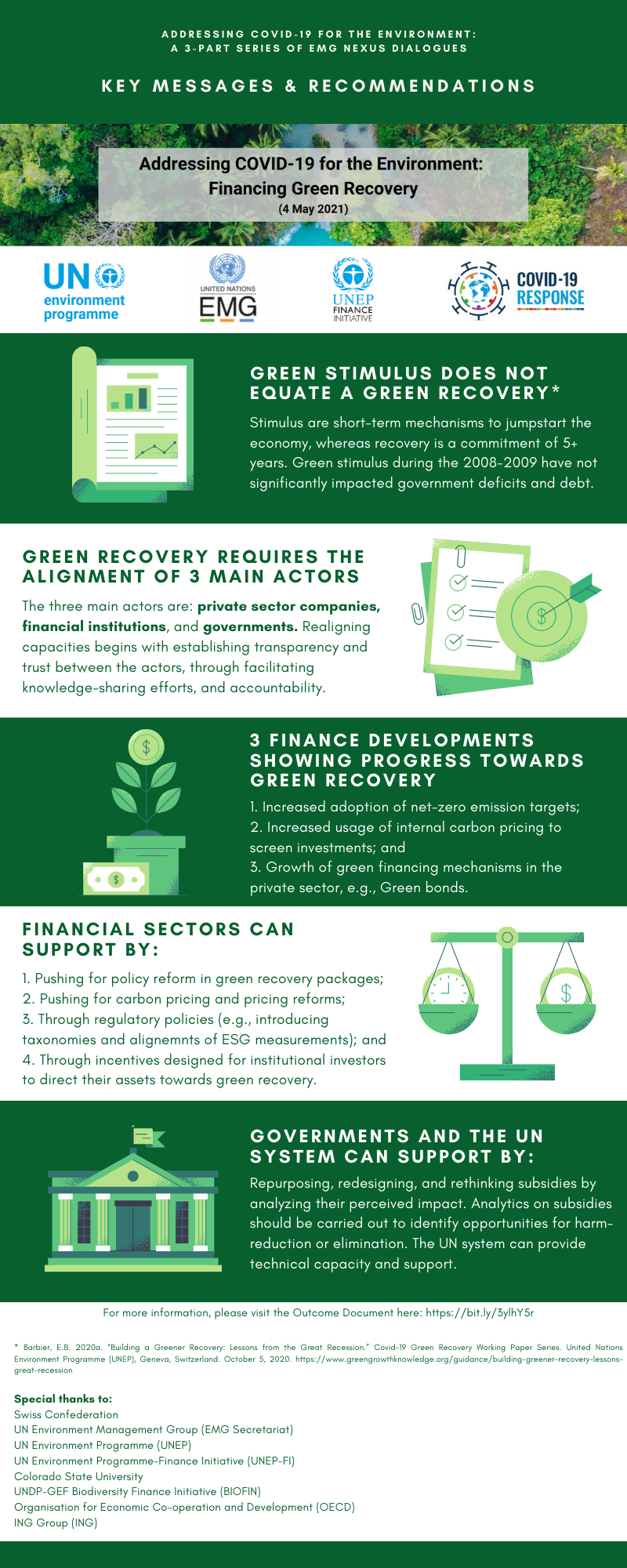
- Financing Green Recovery (4 May 2021): Examining the role of public finance, fiscal policies and private sector investment in supporting a greener and more resilient economic recovery.
- Regional Nexus Approaches to Building Back Better (15 June 2021): Sharing regional experiences and integrated policy approaches to accelerate climate action, decarbonization and sustainable development.
External resources
Defining Green Recovery
27 April 2021 14:00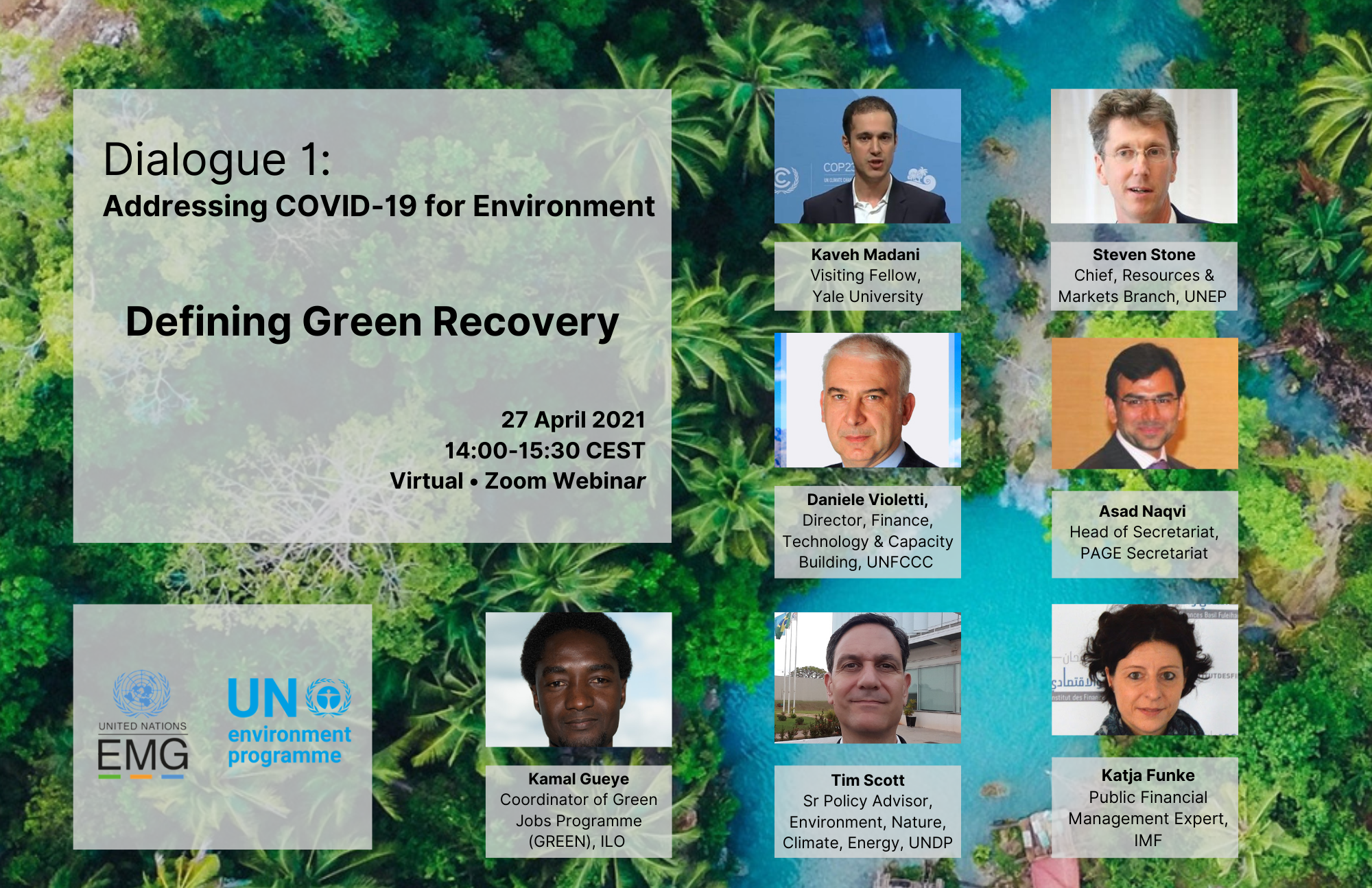
Defining Green Recovery
United Nations Development Programme
International Labour Organization

International Monetary Fund
United Nations Climate Change

United Nations Environment Programme
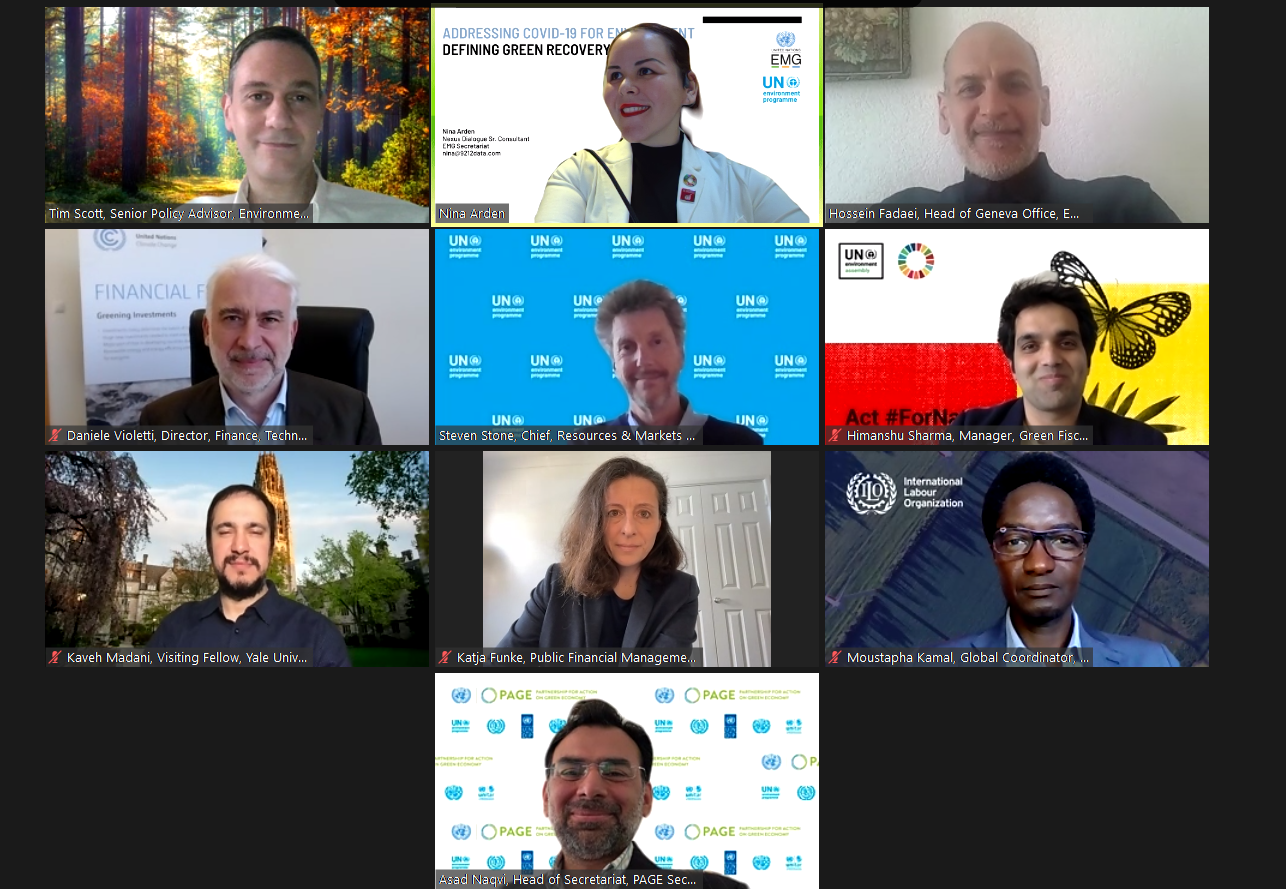
The first dialogue in the EMG Nexus Dialogue series Addressing COVID-19 for the Environment explored how the global response to the COVID-19 pandemic could become an opportunity to advance a greener, more inclusive and sustainable economy.
Bringing together experts from UNEP, UNFCCC, PAGE, ILO, UNDP, IMF and academia, the dialogue examined how to translate green recovery ambitions into concrete policies, investments and measurable environmental outcomes. Discussions highlighted opportunities to align economic recovery measures with the 2030 Agenda and the Paris Agreement, while addressing social inequalities and supporting vulnerable communities.
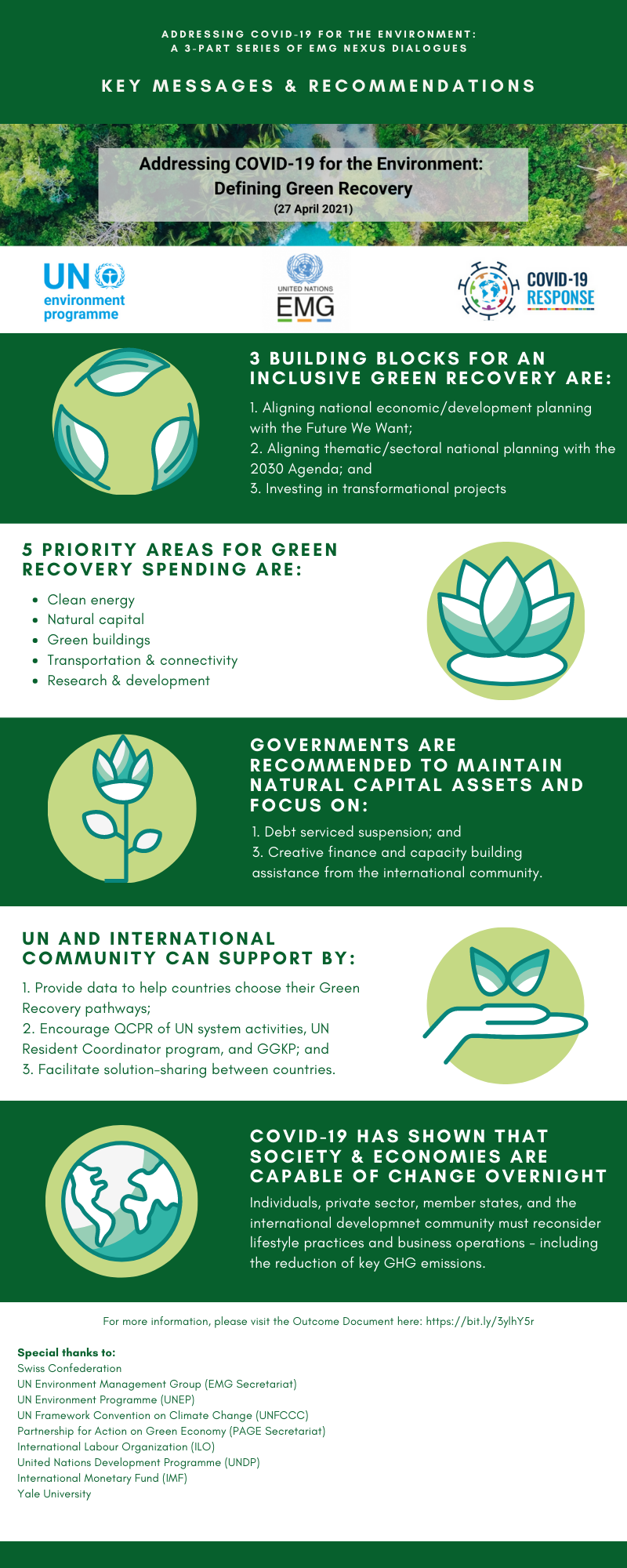
Participants emphasized the importance of investing in clean energy, sustainable transport, natural capital and green infrastructure, alongside strengthening institutional capacities and mobilizing sustainable finance. The dialogue also underscored the need for transparent monitoring of recovery spending, stronger international cooperation and innovative financing mechanisms to ensure that recovery efforts deliver lasting environmental and social benefits.
The dialogue highlighted the central message that economic recovery and environmental sustainability must advance together, with green and inclusive policies offering a pathway to building back better.
Financing Green Recovery
4 May 2021 14:00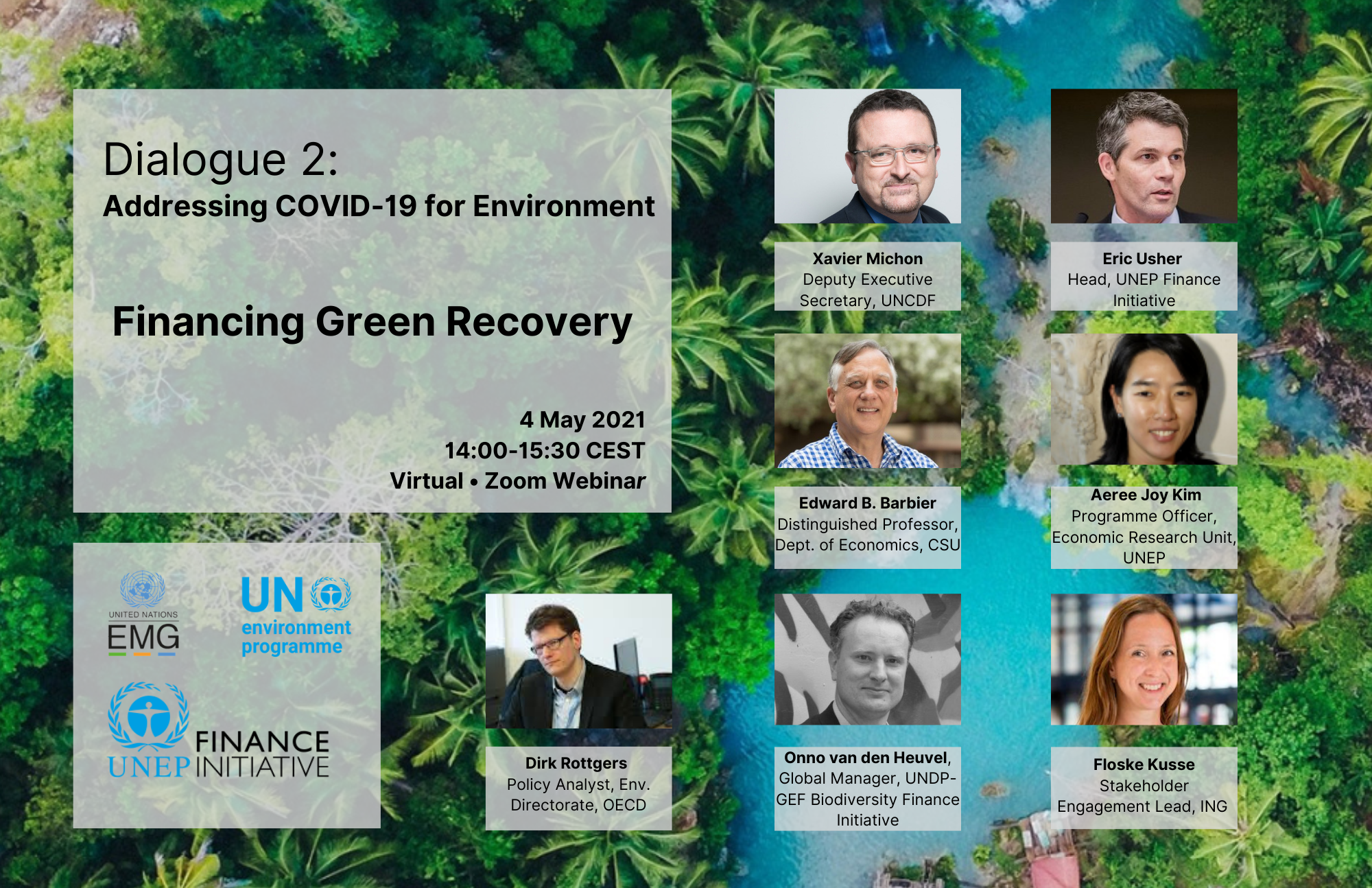
Financing Green Recovery
United Nations Capital Development Fund
United Nations Development Programme
United Nations Environment Programme
The second dialogue in the EMG Nexus Dialogue series Addressing COVID-19 for the Environment explored how public and private finance could support a greener, more inclusive and resilient economic recovery from the COVID-19 pandemic.
Bringing together experts from UNEP, UNEP Finance Initiative, UNCDF, UNDP's Biodiversity Finance Initiative, OECD, academia and the private sector, the dialogue examined lessons from previous economic crises and opportunities to align financial policies and investments with long-term environmental and sustainable development objectives.
Discussions highlighted the importance of green fiscal policies, carbon pricing, reforming environmentally harmful subsidies and mobilizing innovative financing mechanisms, including green bonds and nature-linked financial instruments. Participants also emphasized the need for stronger collaboration between governments, financial institutions and businesses, supported by greater transparency, environmental risk disclosure and common sustainability standards.
The dialogue underscored that financing a green recovery requires more than short-term stimulus measures. It calls for sustained policy reforms, long-term investment and closer alignment of public and private finance to accelerate the transition towards a sustainable and resilient economy.
Regional Nexus Approaches to Building Back Better
15 June 2021 13:00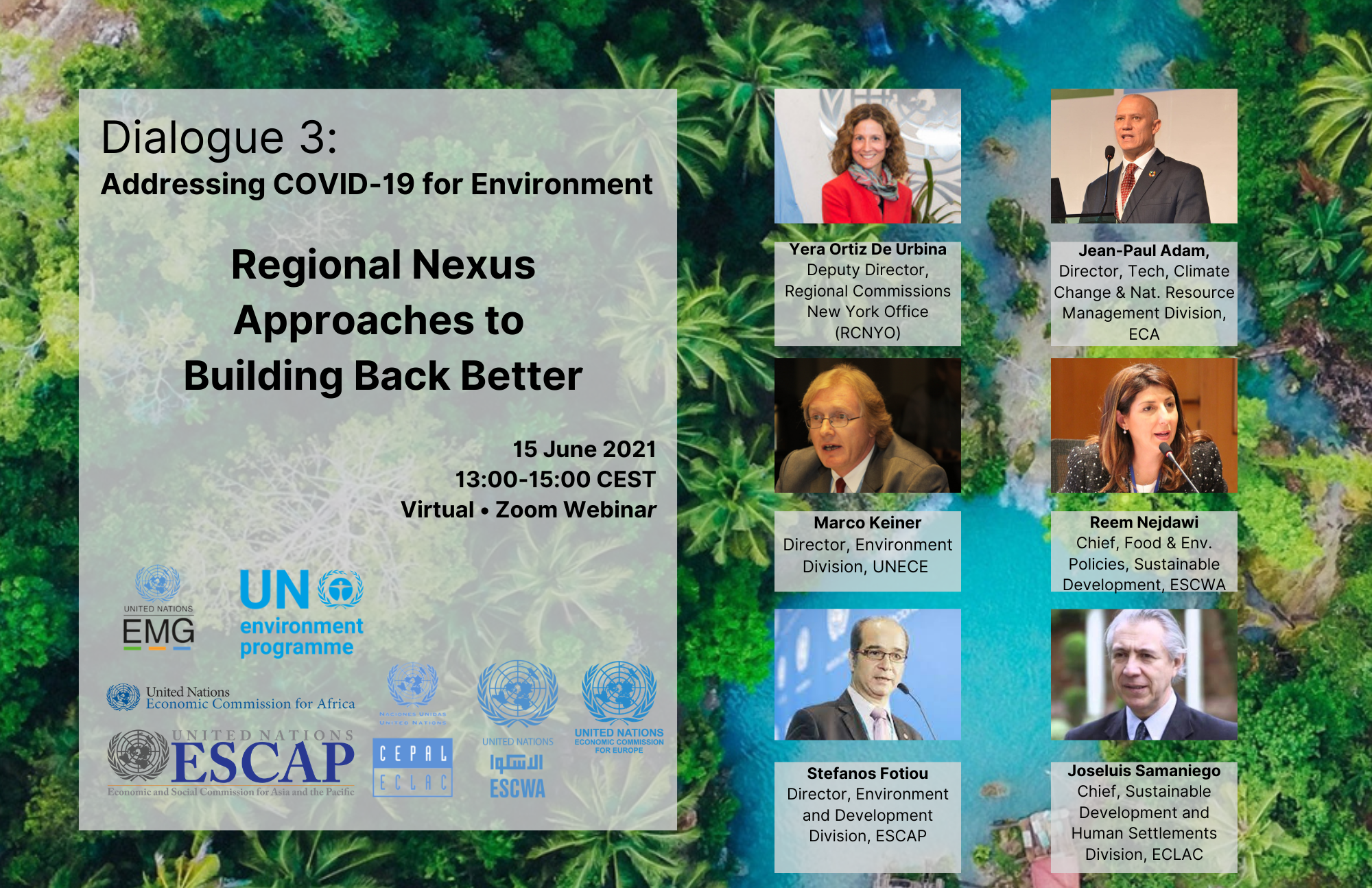
Regional Nexus Approaches to Building Back Better
UN Economic and Social Commission for Asia and the Pacific
UN Economic and Social Commission for West Asia
UN Economic Commission for Africa
UN Economic Commission for Europe
UN Economic Commission for Latin America and the Caribbean
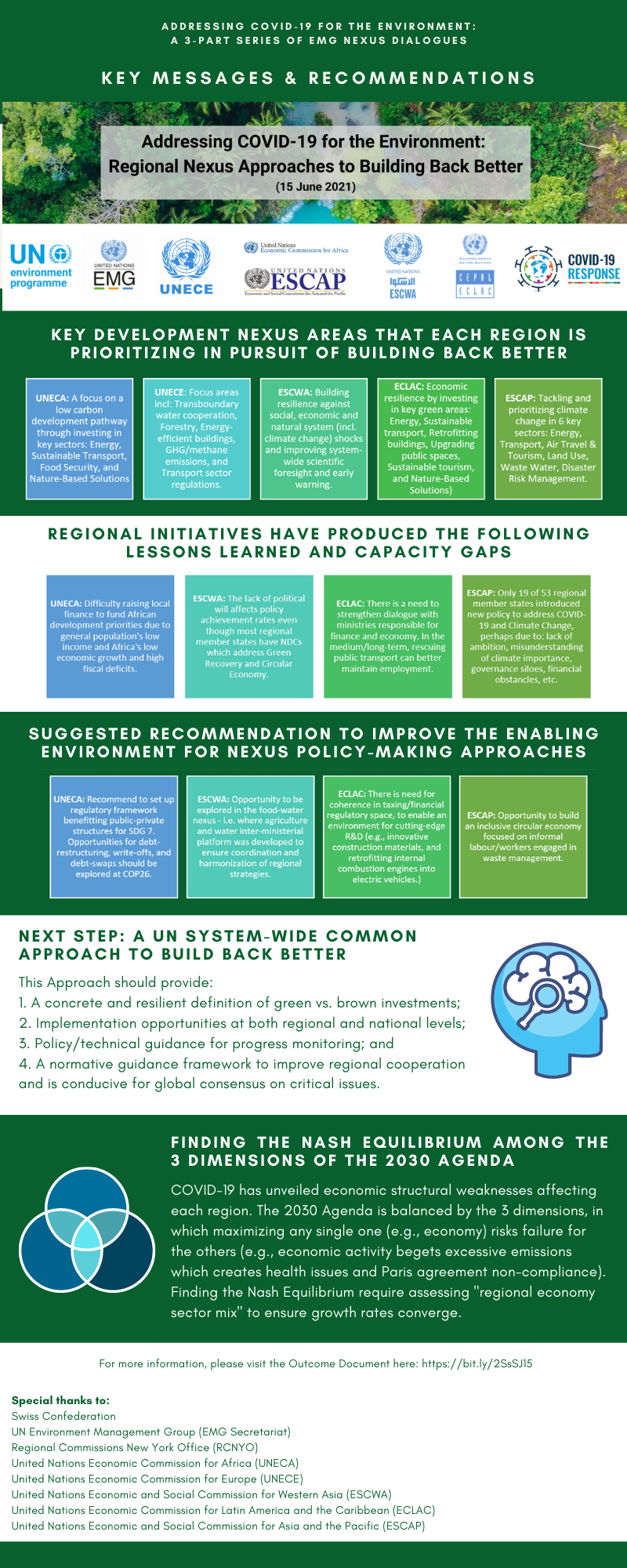
The third and final dialogue in the EMG Nexus Dialogue series Addressing COVID-19 for the Environment explored how integrated, regionally tailored approaches could support a greener, more inclusive and resilient recovery from the COVID-19 pandemic.
Bringing together representatives from the five UN Regional Commissions and the Regional Commissions New York Office, the dialogue examined regional priorities, challenges and opportunities for accelerating climate action, decarbonization and sustainable development. Discussions showcased initiatives across Africa, Europe, Western Asia, Latin America and the Caribbean, and Asia and the Pacific, highlighting opportunities in renewable energy, sustainable transport, nature-based solutions, circular economy and resource management.
Participants emphasized the importance of integrated policymaking that addresses interconnected environmental, economic and social challenges, while responding to the specific circumstances of each region. Key priorities included strengthening regional cooperation, mobilizing sustainable finance, improving regulatory frameworks and enhancing institutional capacities to support green transitions.
The dialogue underscored the value of a coherent UN system-wide approach to building back better, combining shared sustainability principles with flexible, region-specific solutions. It highlighted the importance of cross-sectoral collaboration, knowledge-sharing and coordinated policy action to advance the 2030 Agenda and the Paris Agreement.