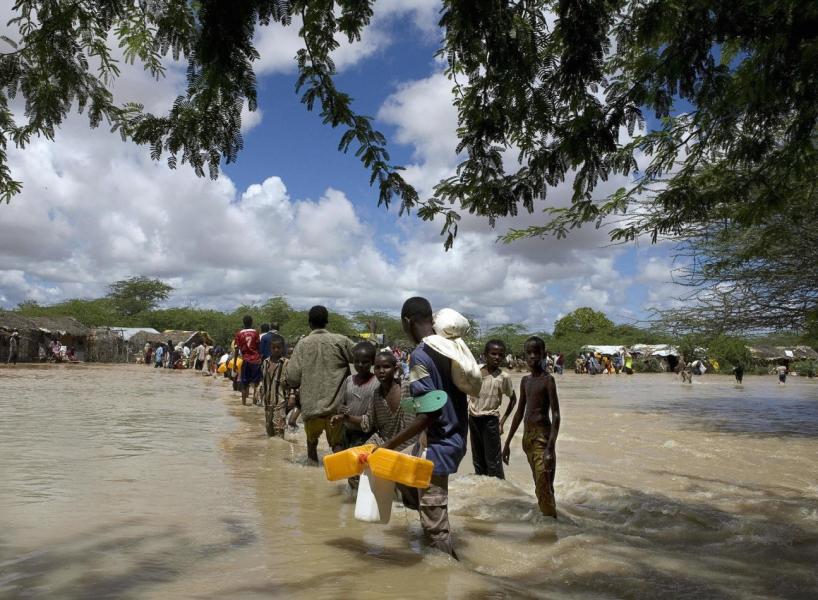
The EMG convened its third Nexus Dialogue on 19 October 2017 to explore how stronger collaboration between the environmental and humanitarian sectors could improve humanitarian responses while building long-term resilience and advancing the 2030 Agenda for Sustainable Development.
Bringing together representatives from UN entities, humanitarian organizations and other stakeholders, the dialogue examined the interconnections between environmental degradation, natural disasters, conflict and displacement. Discussions highlighted how environmental pressures can contribute to humanitarian crises, while humanitarian operations themselves can have significant environmental impacts, particularly through natural resource use, energy consumption and waste generation.
Participants shared experiences and initiatives aimed at integrating environmental sustainability into humanitarian action, including environmental assessments, technical assistance and the application of environmental and social safeguards. Key challenges included limited institutional coordination, insufficient environmental expertise and monitoring, and the difficulty of reconciling immediate humanitarian needs with longer-term sustainability objectives.
The dialogue underscored the importance of moving beyond short-term emergency responses towards more preventive, integrated and environmentally sustainable humanitarian action. It highlighted opportunities for stronger partnerships, improved coordination and the systematic integration of environmental considerations into humanitarian planning and operations, recognizing that protecting the environment and strengthening community resilience are mutually reinforcing objectives.