Convention on Biological Diversity
United Nations Environment Programme

The EMG, in collaboration with the Secretariat of the Convention on Biological Diversity (CBD), organized a two-part series of virtual Nexus Dialogues on 29-20 March 2021 to explore the links between gender equality, biodiversity and human rights.
The Dialogues responded to growing recognition that biodiversity loss and ecosystem degradation can disproportionately affect people in vulnerable situations, including women and girls, while women’s knowledge, leadership and participation remain essential to effective and equitable biodiversity action.
The first Dialogue, Unpacking Linkages with Gender and Biodiversity in UN System Efforts, examined key gender and biodiversity challenges and their connections with the wider environmental and sustainable development agenda.
The second, Towards Gender Responsive Biodiversity Action and Outcomes, focused on gaps, opportunities and next steps for stronger collaboration, including support for a new gender plan of action for biodiversity and gender-responsive implementation of the post-2020 global biodiversity framework.
Together, the Dialogues helped strengthen understanding across the UN system of how gender equality and women’s participation can be more effectively integrated into biodiversity policy and action.
Unpacking Linkages with Gender and Biodiversity in UN System Efforts
29 March 2021 14:00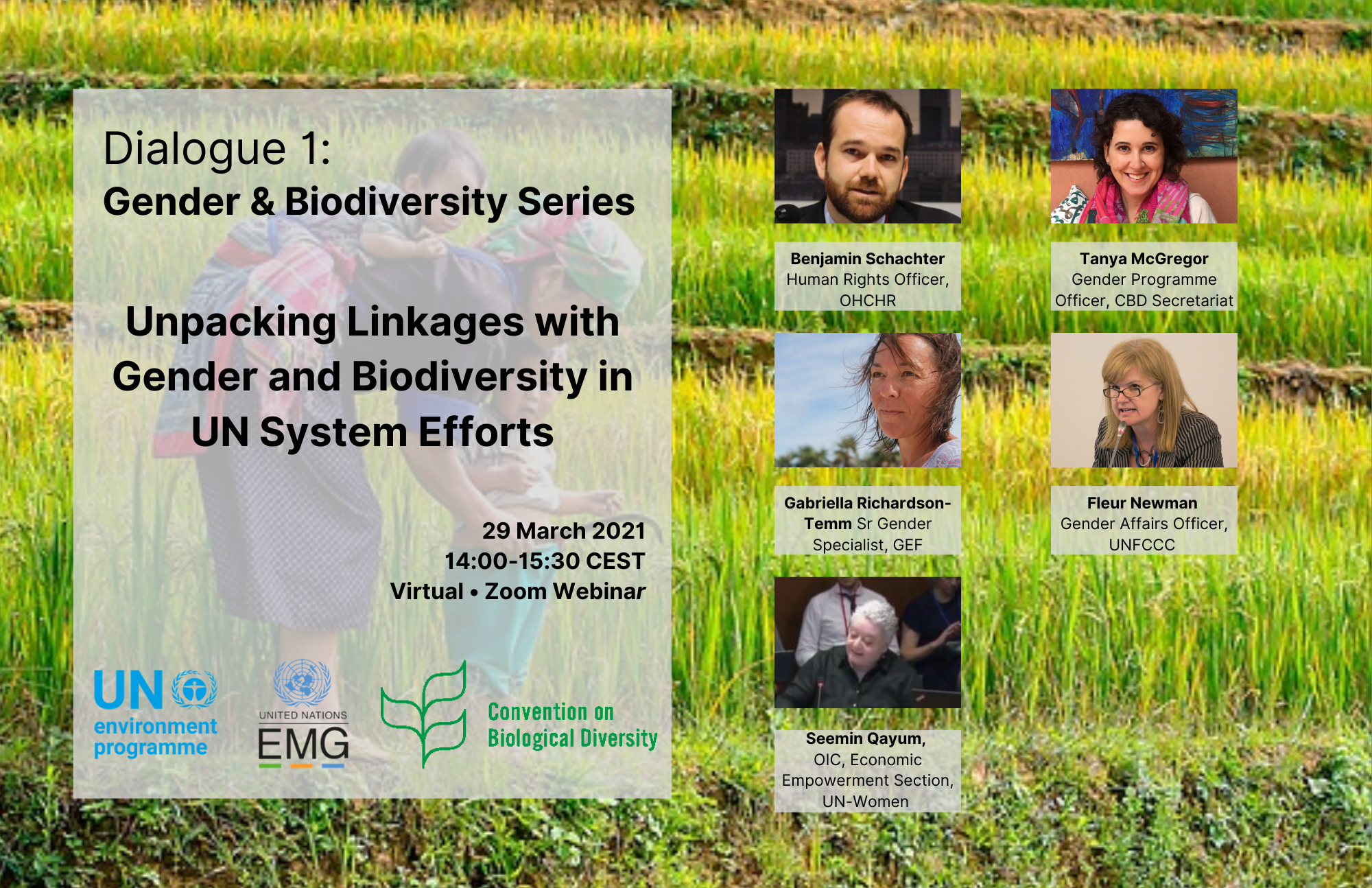
Unpacking Linkages with Gender and Biodiversity in UN System Efforts
United Nations Environment Programme
Convention on Biological Diversity
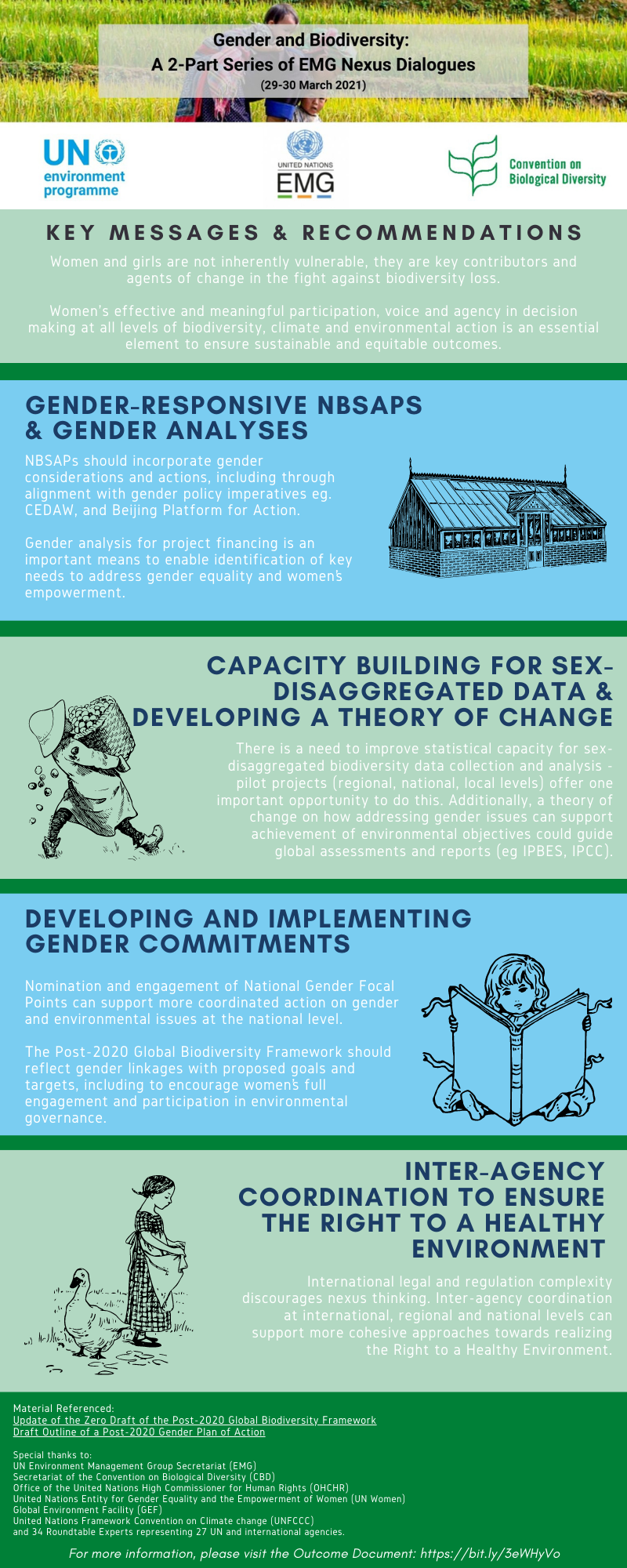
The first dialogue in the EMG’s two-part series on gender and biodiversity explored how gender equality, human rights and biodiversity are connected across UN system efforts. Representatives from the CBD Secretariat, OHCHR, UN Women, the Global Environment Facility and UNFCCC discussed the institutional and systemic factors that shape women’s participation in biodiversity governance, including access to land and natural resources, decision-making power, finance and technical capacity.
The discussion highlighted the importance of moving beyond viewing women and girls simply as vulnerable groups, and instead addressing the structures and norms that create vulnerability and exclusion. Participants also identified the need for stronger gender-responsive biodiversity planning, improved sex-disaggregated data, and closer links between biodiversity policy and wider gender equality commitments such as CEDAW and the Beijing Platform for Action.
The Dialogue helped identify practical entry points for UN action, including gender-responsive National Biodiversity Strategies and Action Plans, stronger support for women’s organizations, improved statistical capacity, and greater attention to gender in emerging biodiversity issues such as nature-based solutions.
Towards Gender Responsive Biodiversity Action and Outcomes: A Workshop
30 March 2021 14:00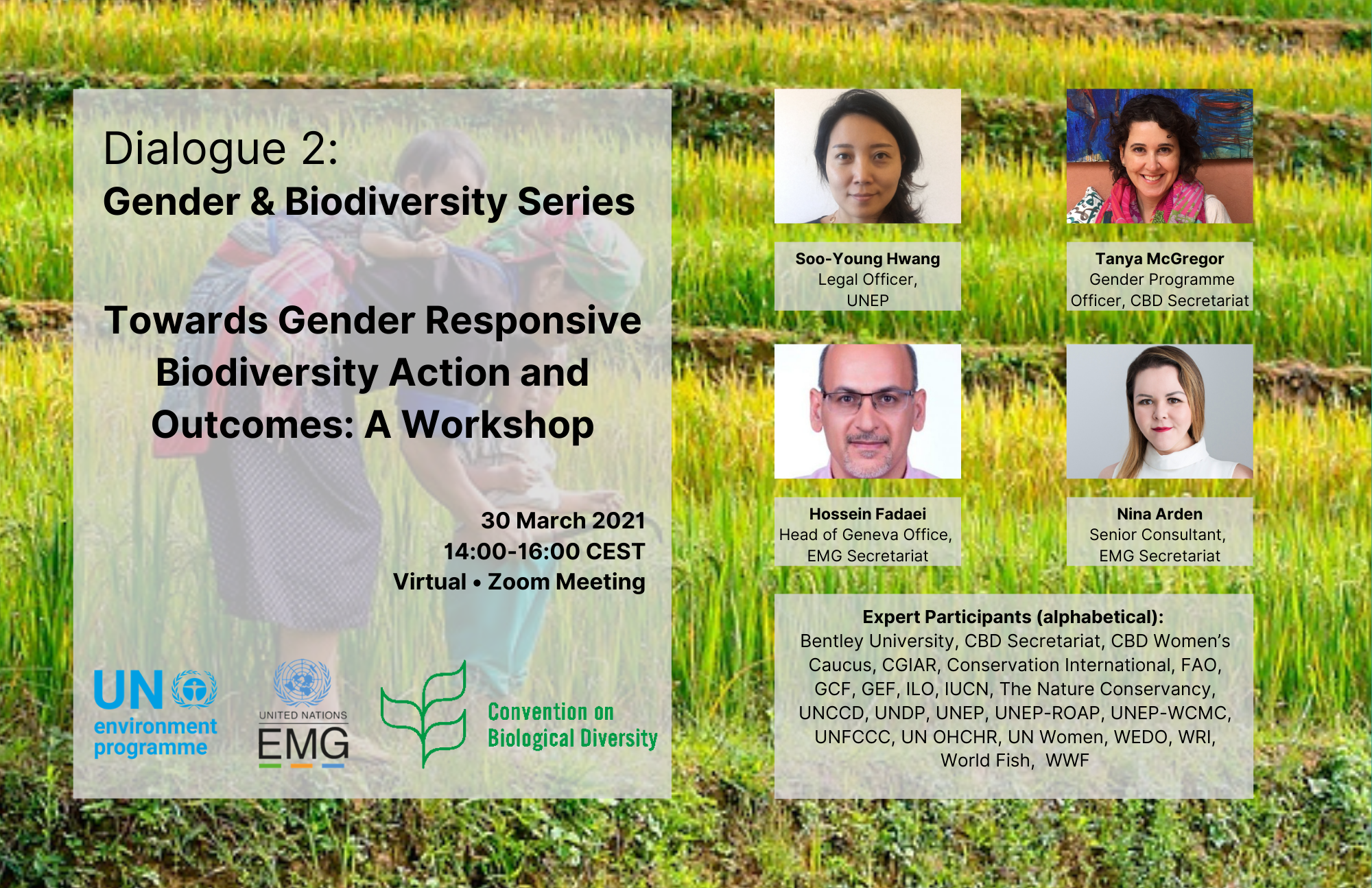
Towards Gender Responsive Biodiversity Action and Outcomes: A Workshop
Convention on Biological Diversity
United Nations Environment Programme
The second dialogue, held as a workshop, brought together 34 experts from 27 UN and international organizations to identify gaps, opportunities and practical next steps for gender-responsive biodiversity action. The discussion focused on the proposed CBD Gender Plan of Action and the gender-responsive implementation of the post-2020 Global Biodiversity Framework.
Participants examined how biodiversity policy and programming could better support women’s equal access to and control over biodiversity and ecosystem services, ensure that women benefit equally from conservation efforts, and reflect the perspectives, needs and interests of women and girls in decision-making. Particular attention was given to knowledge and data, partnerships with women’s organizations, monitoring and reporting, and adequate resources for implementation.
The workshop also identified opportunities to strengthen coherence across the Rio Conventions and other multilateral environmental agreements, integrate gender into National Biodiversity Strategies and Action Plans, improve gender-specific indicators and sex-disaggregated data, and strengthen collaboration at regional and national levels. Participants emphasized that meaningful progress requires gender considerations to be embedded not only in policies and frameworks, but also in the everyday working practices of institutions and the UN system.