United Nations Human Rights Office of the High Commissioner
The EMG, in collaboration with the Office of the UN High Commissioner for Human Rights (OHCHR), organized a three-part Nexus Dialogue series on Human Rights and the Environment to strengthen understanding of the human right to a healthy environment and promote more coherent, rights-based environmental action across the UN system.
The series explored the links between human rights and major environmental challenges, including biodiversity loss, climate change, chemicals and waste, as well as procedural rights such as access to information, participation and access to justice. It also examined how a rights-based approach could strengthen environmental action and help protect people in vulnerable situations and environmental human rights defenders.
The three dialogues moved from building a shared understanding of the right to a healthy environment, to examining its substantive elements, and finally to identifying practical opportunities for coordinated UN action. Discussions included how to integrate human rights into UN Country Team work, multilateral environmental agreements and international environmental processes, and helped inform consideration of a dedicated EMG Issue Management Group on Human Rights and the Environment.
The series comprised The Right to a Healthy Environment, Examining the Elements of the Right to a Healthy Environment, and Supporting Rights-Based Environmental Action: A Workshop.
The human right to a healthy environment
24 July 2020 14:00
The human right to a healthy environment
United Nations Human Rights Office of the High Commissioner
The first dialogue in the series introduced the human right to a healthy environment and explored why its recognition and implementation matter for both people and the planet. Participants examined the procedural and substantive dimensions of the right, including access to information, participation and justice, as well as clean air, a safe climate, safe water, healthy food, non-toxic environments and healthy ecosystems.
The discussion highlighted barriers to effective implementation, including weak institutions, limited capacity, gaps in the rule of law and the absence of a harmonized international approach. Participants emphasized the importance of stronger UN guidance, broader recognition of the right, protection of environmental human rights defenders, and more meaningful participation by children, young people and other groups in vulnerable situations.
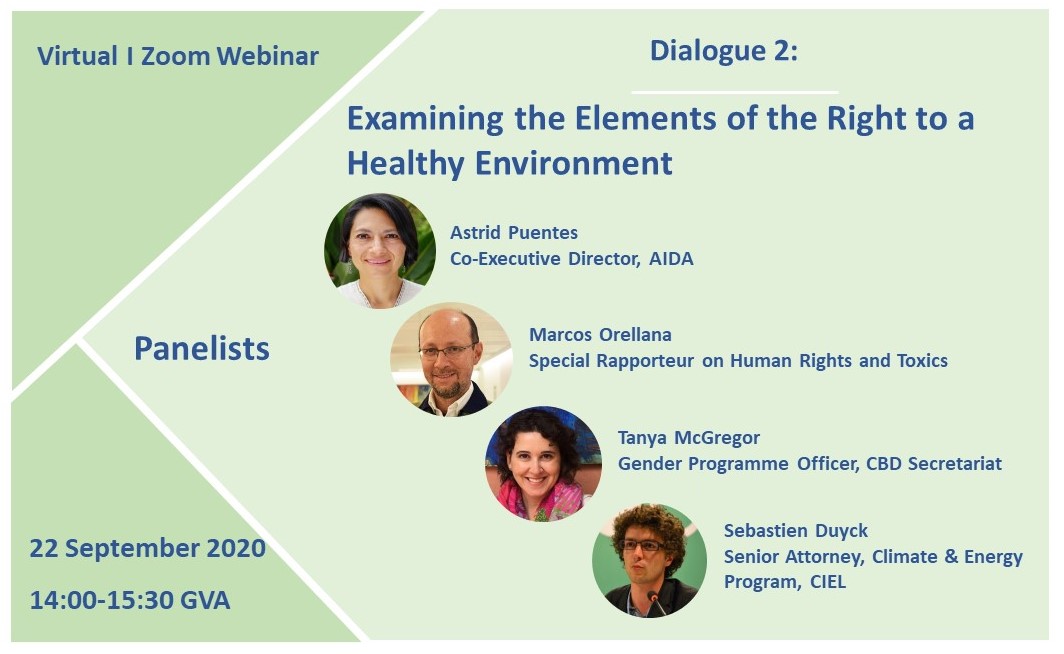
Examining the Elements of the Right to a Healthy Environment
22 September 2020 14:00
Examining the Elements of the Right to a Healthy Environment
United Nations Human Rights Office of the High Commissioner
The second dialogue looked more closely at the substantive elements of the right to a healthy environment and their links with biodiversity, climate change, chemicals and waste, and environmental participation rights. Participants explored how environmental degradation can affect rights to life, health, an adequate standard of living, non-discrimination and participation in cultural life.
The discussion identified gaps in policy coherence and accountability, while highlighting opportunities to integrate human rights more systematically into environmental action. These included stronger use of participation and justice mechanisms, incorporation of human rights into the post-2020 Global Biodiversity Framework and climate action, and a more holistic, rights-based approach to chemicals and waste management.
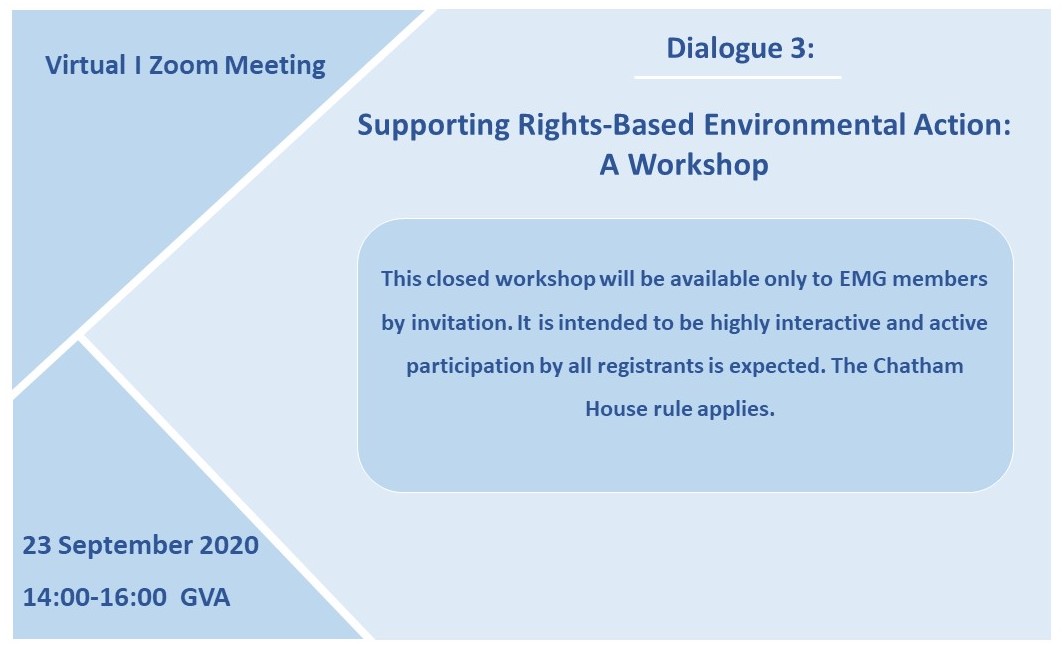
Supporting Rights-Based Environmental Action: A Workshop
23 September 2020 14:00
Supporting Rights-Based Environmental Action: A Workshop
United Nations Human Rights Office of the High Commissioner
The third dialogue took the form of a practical workshop focused on how the UN system could translate the principles discussed in the first two sessions into coordinated action. Participants considered how human rights could be integrated into the work of UN Country Teams, human rights mechanisms and multilateral environmental agreements, and how interagency collaboration could be strengthened at global, regional and national levels.
A central focus of the workshop was the proposal to establish an EMG Issue Management Group on Human Rights and the Environment. Participants discussed its possible mandate, activities and outputs, including joint messaging, guidance for Nationally Determined Contributions and National Biodiversity Strategies and Action Plans, and support for integrating environmental rights into Common Country Analyses and UN Sustainable Development Cooperation Frameworks. The workshop’s inputs were subsequently incorporated into the proposal presented to the EMG Senior Officials.